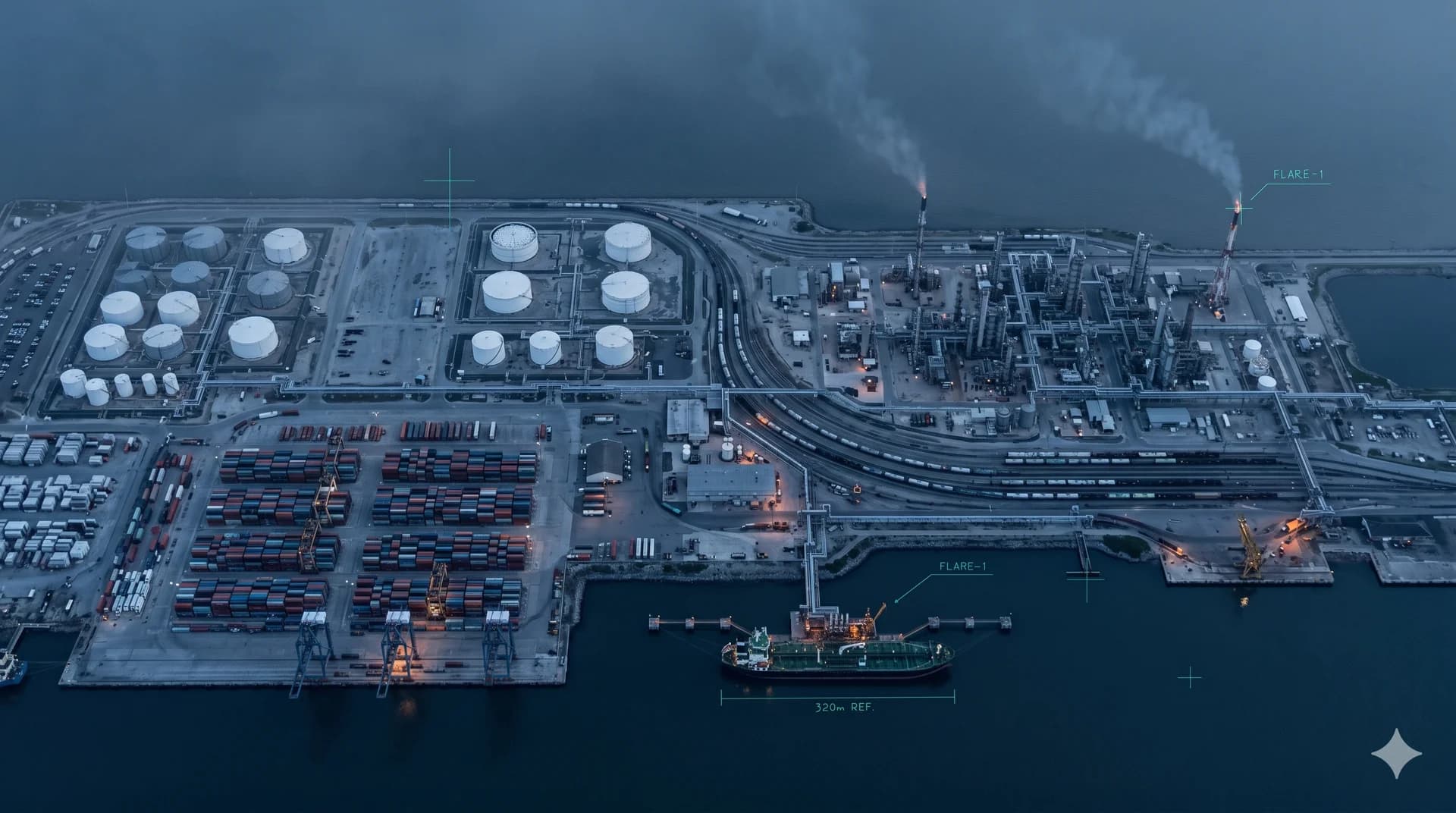
A private equity buyer used Floodlight's satellite-derived emissions data inside KPMG's diligence workflow and renegotiated a ~19% reduction in acquisition price on a 30-site industrial portfolio.
When a private equity buyer used Floodlight's emissions data during due diligence on 30 industrial sites, they walked away with a ~19% reduction in acquisition price.
KPMG's Climate Advisory practice advises private equity firms, large public companies, and global asset managers through some of the most intensive sustainability disclosure cycles their clients have ever faced. The pace is brutal. CSRD, the SEC climate rule, and SFDR have collapsed the timeline available to verify emissions across global portfolios, while traditional bottom-up audits have grown more expensive and harder to scale.
When one of KPMG's private equity clients began due diligence on a 30-site industrial portfolio with European export exposure, the team needed a credible, location-specific picture of operational emissions and physical climate risk across every asset, and they needed it in days, not quarters. Self-reported data from the target was thin. Site visits would have taken longer than the deal window. The buyer was negotiating against a stated emissions baseline that nobody had independently verified.
The team brought Floodlight in to layer satellite-derived emissions intelligence on top of the diligence process. Within one week, Floodlight delivered Scope 1 baselines for all 30 locations, physical climate risk ratings tied to each asset's exact coordinates, and a screening report flagging the sites most exposed to incoming CSRD requirements.
Because the measurements came from independent satellite observations rather than self-reported figures, they were directly defensible in the disclosure work that would follow the close. Floodlight's pipeline blends top-down CO₂ retrievals from NASA's OCO-2 mission with high-resolution methane data from GHGSat and Sentinel-5P, then reconciles those observations against local meteorology and asset-specific dispersion models. The output is asset-level Scope 1 estimates with a defensible scientific provenance and a confidence interval, not a number on a spreadsheet.
The buyer used the data to renegotiate. The seller's stated emissions, anchored to self-reported figures, materially understated the regulatory liability sitting on several facilities. With independent measurements on the table, the buyer pressed for a price adjustment reflecting both the cleanup cost and the remediation timeline implied by incoming European disclosure requirements. The final purchase price came in roughly 19% below the original ask.
The same pipeline now refreshes the portfolio annually. KPMG's advisory teams use the data layer for CSRD-aligned disclosures, for risk-adjusted financial forecasting, and for evaluating divestment candidates. The "outside-in" view holds up under audit scrutiny in a way that self-reported numbers from years past simply do not.
"We seek to deliver the most innovative solutions to serve our clients. Floodlight's cutting-edge approach to taking direct measurements, versus estimates, dramatically increased KPMG's ability to meet our clients' needs. As regulations continue to change worldwide, Floodlight's GHG emissions capabilities dovetail nicely with KPMG's strategies to support our clients' climate agenda."
Mark Golovcsenko, Principal (Partner), Climate Advisory, KPMG US
See how Floodlight can help your organization achieve similar results with our comprehensive climate risk intelligence platform.
